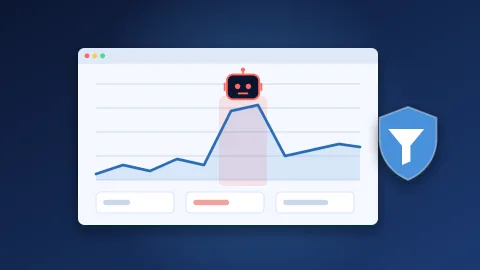
The owner of a small site opens Metrica and sees several dozen visitors a day — a quiet, understandable site. At the same time, the server responds to requests that Metrica knows nothing about.
This article is about those who come to the site, but do not get into the statistics: how many of them, what they need and how they are dangerous for business.
- Contents
- There are fewer people on the Internet than there are programs
- Why the owner does not see them
- Who are these bots
- What does this mean for business
- How to check your site
- What to do
There are fewer people on the Internet than there are programs
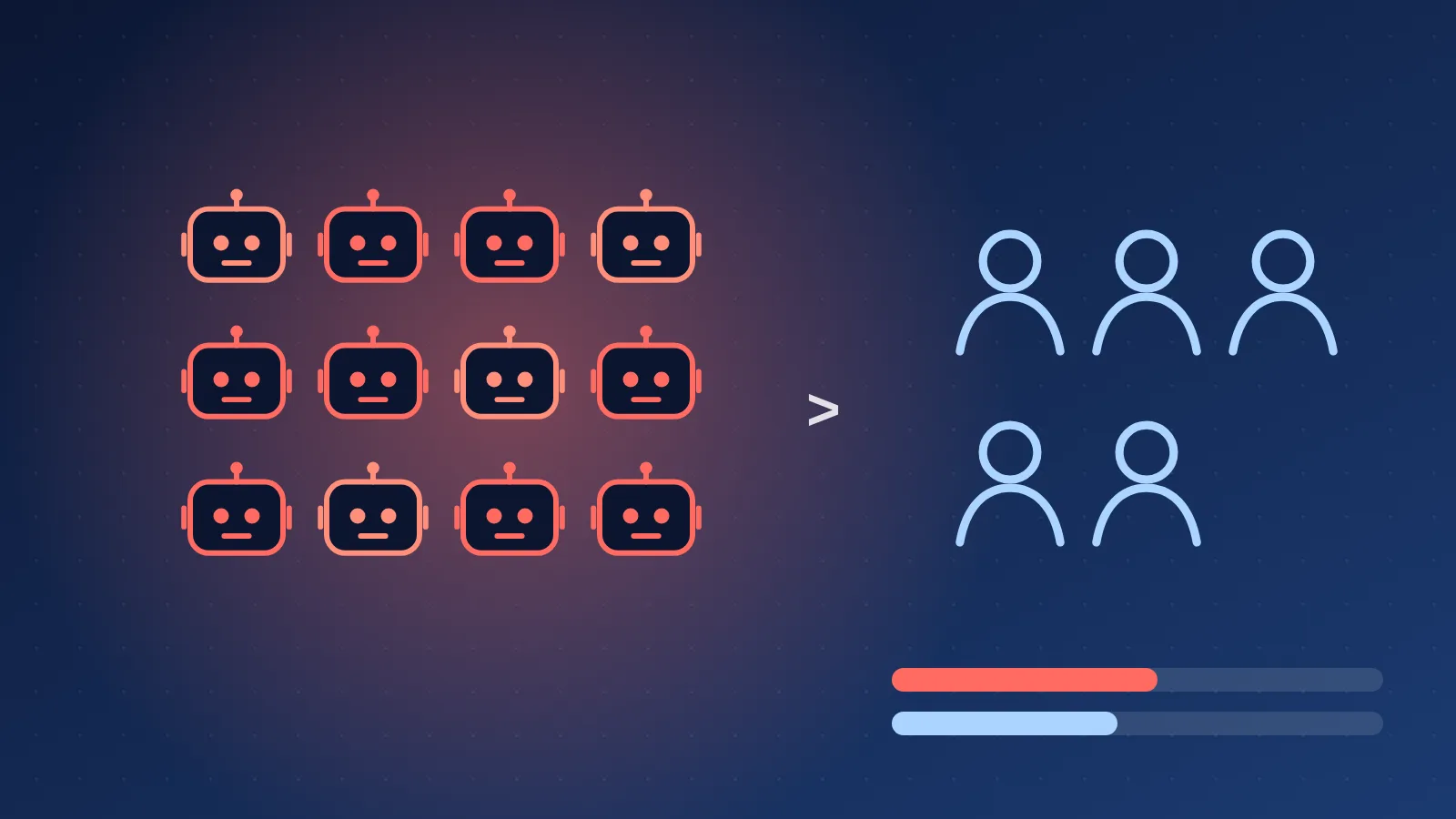
Every year, Imperva (part of Thales) publishes the Bad Bot Report on bots on the Internet. By the 2025 release, in 2024, automated traffic outpaced human traffic for the first time in a decade.
- 51%web traffic in 2024 — programs, not people
- 37%of all traffic — malicious bots: scanners, password collectors, parsers
- 14%— useful robots: search engines, accessibility check services
Shares of web traffic in 2024 according to Imperva Bad Bot Report 2025.
In the next issue, 2026, the proportion of automated traffic for 2025 increased again – to about 53%. Simply put, more than half of the world's web traffic is generated by software, not by humans, and a significant proportion of these programs come with no good intentions.
Imperva’s statistics are compiled from the websites of its clients – mainly large companies. On a small site, the percentage of bots depends on the niche, competitors and traffic, but bots come there too: scanners don’t care how well-known the site is.
Why the owner does not see them
Metrics and other counters work through code on the page. The visit is recorded in the statistics only if the browser loaded the page and executed this code.
- The bot sends a short request to one address
- The serverresponds and logs the request
- Metricsees nothing: page code was not executed
Most of the malicious bots are only visible in the server log.
Most malicious bots do not need the page at all: they refer to a specific address – for example, the admin login page – and go on Bots are more difficult to execute page code. Some of them are recognized as robots by Metrics, some are not; how to find them is explained in the article “Bots in Yandex Metrics”.
The conclusion is simple: a “clean” Metric does not mean that there are no bots.
Who are these bots and what do they need
- Vulnerability scannersThey check the addresses where forgotten configuration files, backups, outdated add-ons. They don’t care what the site is made of — they check everything.
- Password scammersAgain and again they try to log into the admin with different logins and passwords.
- ParsersThey copy prices, product descriptions and texts — for competitors and aggregators.
- SpambotsThey find application forms and comments and fill them with advertisements and links.
- Imitators of visitorsThey walk through pages and click on links like humans. They distort statistics.
- Helpful robotsYandex, Google and other search engines. They cannot be blocked: the site will disappear from search.
What does this mean for business
- Slow site and expensive hostingThe server is spending resources on bots. During peak hours, pages load slower and the hosting offers a more expensive rate.
- HackingThe scanner finds an outdated add-on or forgotten file — and the site appears with foreign code, spam pages or a redirect. Search engines warn about such sites, and visitors leave.
- Lost applicationsAmong dozens of spam messages, this application is lost. More — in the article “Request-Form-Spam” is spam in the form of requests.
- Wrong decisionsIf there are many bots in the statistics, advertising and promotion are evaluated on the basis of distorted data.
How to test your site yourself
- Server logsAsk the host or developer for an access log per day. For a live visitor, one page is dozens of queries: pictures, styles, scripts, so there are always more requests than visits. Another thing to worry about is access to addresses that are not on the site, and individual IP addresses with thousands of requests.
- MetricaIn the report, select the comparison with robots in the "Data: No Robots" setting and look at the Robots report in the "Monitoring" section.
- The loadOpen the load schedule in the hosting panel. If at night, when customers are sleeping, the load is almost as high as during the day, this is a reason to investigate.
- Foreign addressesLook in the log for requests to login pages and files that are not on your site and were not on your site: corporate addresses of other CMS, foreign CMS, log requests,
/.env,/backup.zip. If there are — they are definitely bots.
What to do
Basic hygiene - free of charge
- Update your CMS, themes and add-ons, remove unused ones.
- Set strong passwords and admin login with confirmation (two-factor).
- Make backup copies and store them separately from the site.
- Open it in your browser
вашсайт/.envandвашсайт/backup.zipThere should be nothing to open and download.
Filtering traffic to site
- Scanners, pickers, parserscut off to the site
- Flood site protectionis a browser check
- Humans and search engines pass, the authenticity of robots is checked
Search robots can not be skipped by "name" in the query - its bot will easily forge. Their authenticity is verified against the address from which the request came.
Shortly
- More than half of Internet traffic is software, and a significant proportion of it is malicious.
- The metric does not show everyone: most malicious bots are visible only in the server log.
- The consequences are a slow site, hacking, spam requests, distorted statistics.
- Start with server log and basic hygiene.
Find out who visits the siteWhiteShield is placed on your server in front of your site: it blocks bots and parsers, deflects attacks, and in the event of a flood, activates a browser check that the live visitor does not notice. I take care of setting up and updating the protection.Read more about WhiteShield